

My personel story
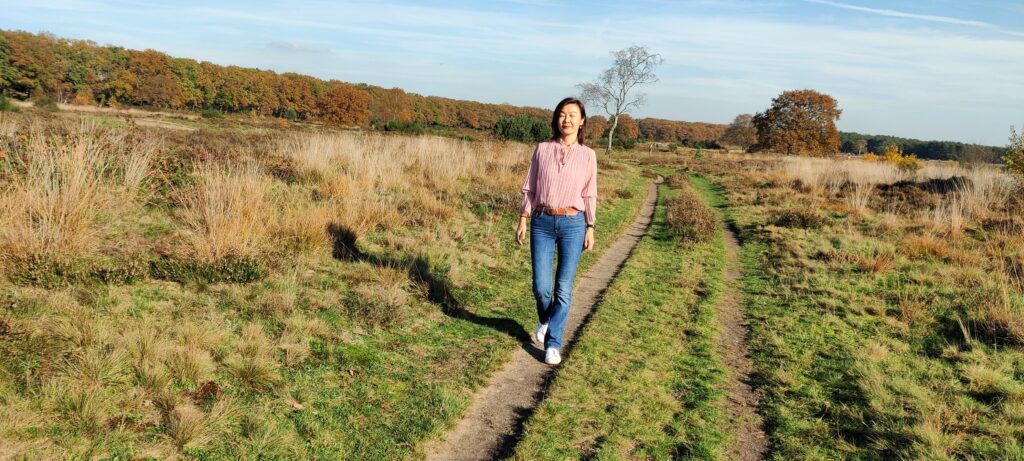
Last Tuesday I met a colleague friend from my earlier job. She also left there 3 years ago.
It is time to share my personal story. For 13 years, my identity was summarized in two words: Banking Analyst. It came with a sleek title, a salary that impressed my parents, and a corner of a skyscraper with a view that made me feel important. My world was built on Excel models, presentations, and the relentless hum of ambition. Success was a number, a deadline met, a deal closed. I was running on a treadmill of achievement, and for a long time, I was proud of the pace I could keep.
The first signs were easy to dismiss. It was just fatigue, I thought. But it wasn’t just tiredness. It was a heavy, leaden feeling in my limbs every morning when the 7 AM alarm blared. The vibrant colors of my life began to drain, leaving everything in a shade of gray. The numbers on my spreadsheets, once a puzzle to be solved, became meaningless hieroglyphics. I’d sit in meetings, hearing words like “PBT”(profit before tax), “RAROC” (risk-adjusted return of capital) and “synergy,” but they felt like a foreign language. My body started to rebel. Constant tension headaches, a stomach that was always in knots, and a heart that would race for no reason. I was irritable, withdrawing from friends, cancelling plans. I’d come home, too exhausted to cook or even speak, and just lying on the couch. This wasn’t just burnout; it was a deep, quiet depression. It felt like I was watching my own life from behind a thick pane of glass, unable to participate, unable to feel anything but a hollow numbness.
Quitting was terrifying. The identity I had worked so hard to build was gone. For months, I felt lost. I slept, I went for long walks, and I tried to remember what it felt like to be a person, not a producer.
During this time, a friend suggested me to visit a Chinese-speaking acupuncturist in Amsterdam. Desperate for anything to ease the constant anxiety, I went. I remember talking to a friendly Chinese lady about my symptoms in my mother-tongue, she gave me some pulse and tongue diagnosis. Then she asked me to lie on the table, the needles placed with a quiet precision. There was no rushing, no demand. For the first time in years, I was still. A profound sense of calm washed over me, and I slept—a real, restorative sleep—right there on the table. It wasn’t magic, but it was the first time I felt a flicker of hope. I was fascinated. How could something so simple create such a profound shift? I started reading, researching, and a new, alien thought emerged: Could I learn to do this for others?
Enrolling in acupuncture school was a bit culture shock, though acupuncture culture is deeply-rooted in China and I am Chinese. My classmates were former nurses, yoga teachers, and from all walks of life. We weren’t studying profit margins; we were studying the flow of Qi, the balance of Yin and Yang, the meridian pathways of the body. It was intuitive, holistic, and deeply human. I went from analysing data to listening to pulses. From presenting to business partners to holding space for patients.
It was humbling and challenging in a completely new way. My banking brain initially struggled with the lack of black-and-white answers, but I slowly learned a different kind of logic—one of connection and observation. I was learning to be a detective of well-being, not of financial discrepancies.
Now, as an acupuncturist for 8 years, my life looks just great. My “office” is a quiet and warm spaces. My “clients” are people, not numbers. I don’t help move money; I help move energy. The woman who comes in with crippling stress, the man with chronic pain, the couple struggling with infertility—I get to witness their journeys toward healing.
The irony isn’t lost on me. My old life was about compartmentalization, and my new one is about integration. My analytical skills are still there; they just help me piece together a patient’s story from their symptoms, their pulse, their tongue. The drive for excellence is still there, but it’s now directed toward compassionate care.
Leaving banking wasn’t a failure; it was a glamorous transformation. I traded the language of KPI for the silent, potent language of needles. I traded a life of external validation for one of quiet, profound purpose. The depression and burnout were not a detour; they were the signposts that forced me onto the right path. And, the path feels like my own.